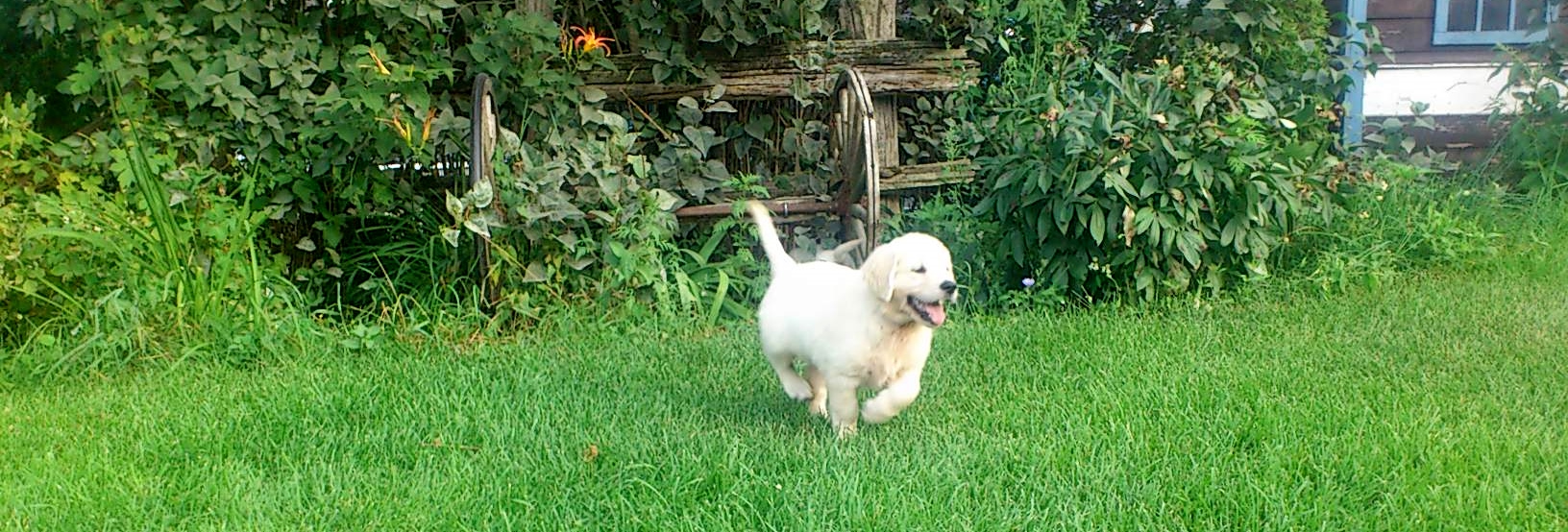
Understanding Fear Phases in Puppies
Understanding Fear Phases in Puppies & Dogs
What Are Fear Phases?
First things first — take a deep breath. If you’re reading this because your once-confident puppy is suddenly acting nervous or cautious, you’re in the right place, and everything is going to be okay.
Fear phases (sometimes called “fear periods” or “fear stages”) are completely normal developmental windows that every puppy goes through. They are not a sign of poor breeding, bad temperament, or failed socialization. They are not your fault. They are simply part of how puppies grow up.
Think of fear phases as emotional growth spurts. Just as your puppy’s body goes through rapid physical changes, their brain does too. During a fear phase, the brain becomes temporarily more sensitive and cautious — more impressionable, more alert to potential danger. This is actually a beautifully designed biological mechanism. It’s a brief window when your puppy’s brain is working overtime to figure out what is safe and what isn’t, helping them build a mental map of the world.
Every single puppy goes through these phases. Some breeze through with barely a hiccup; others show more obvious signs of unease. Either way, with your gentle guidance, patience, and steady presence, they pass — and your puppy emerges more resilient on the other side.
When Do Fear Phases Happen?
There are two well-recognized fear periods in a puppy’s development. Here’s what to expect with each one:
The First Fear Period: Approximately 8–11 Weeks
This first window often coincides with one of the biggest transitions of your puppy’s life — going home with their new family. Your puppy is leaving their mother, their littermates, and the only world they’ve ever known. It’s a lot of change at once, and their brain is especially impressionable during this time.
During this period, a single frightening experience can leave a lasting impression. A loud noise, a rough handling experience, or an overwhelming encounter can feel magnified to a puppy whose brain is in this heightened state of sensitivity. The good news? Positive, gentle experiences are equally powerful. Every calm, happy interaction you provide is building a strong emotional foundation.
This phase typically lasts one to three weeks.
The Second Fear Period: Approximately 6–14 Months
This one often catches owners off guard — and for good reason. By six months old, your puppy may look like a grown-up dog. They’ve got their adult teeth, they may be close to their full size, and they’ve been confidently navigating the world for months. So when they suddenly startle at a garbage bag on the sidewalk or refuse to walk past a parked bicycle, it can feel confusing and even alarming.
But rest assured: your puppy is still emotionally developing, even if their body looks mature. Smaller breeds tend to experience this second fear period a bit earlier (around 6–9 months), while larger breeds — like our Golden Retrievers — often hit it later (around 10–14 months).
This phase may come and go in waves. It can last a few days or stretch on for a few weeks, and it may feel more intense simply because your dog is bigger and their reactions — barking, pulling back, freezing — feel more dramatic. This is completely normal.
Remember
Every puppy is different. Your puppy’s fear phases may be subtle or quite noticeable — both are normal. There is no “right” way for a puppy to experience a fear period.
Why Do Fear Phases Happen?
It helps to understand the why behind these phases — because once you understand the purpose, it becomes much easier to respond with patience rather than worry.
Fear phases are rooted in evolution. In the wild, young animals face very real dangers — predators, environmental hazards, unfamiliar territories. A period of heightened caution at just the right developmental stage helped young animals survive by making them more careful, more observant, and more likely to learn from negative experiences quickly. The puppies who paused before charging into the unknown were the ones who survived to grow up.
During a fear phase, your puppy’s brain is like soft clay — highly moldable and deeply impressionable. Good experiences sink in beautifully, helping to shape a confident, well-adjusted dog. But frightening experiences can also leave a deeper mark than they would at other times. This is precisely why how you respond during these windows matters so much.
The wonderful news? These phases are temporary. They are a sign that your puppy’s brain is developing exactly as it should — forming new neural connections, processing the world, and learning to navigate it. It’s healthy neurological development in action, even when it doesn’t feel like it.
What Does a Fear Phase Look Like?
Signs You Might Notice
Fear phases can look different in every puppy, but here are some of the most common signs to watch for. You may notice just one or two, or several at once:
- Suddenly hesitant or cautious around things they were perfectly fine with before — a piece of furniture, a person, a sound
- Tucked tail, flattened ears, or cowering posture — their body language says “I’m not sure about this”
- Freezing in place or actively trying to retreat, back away, or hide
- Startling easily at noises, objects, or sudden movement that didn’t bother them before
- Whale eye — showing the whites of their eyes, often while turning their head away
- Lip-licking or yawning when they’re clearly not tired or hungry (these are calming signals)
- Refusing walks or backing away from familiar people, places, or objects
- Barking, growling, or lunging — especially if they feel cornered or unable to create distance
- Trembling or shaking when it isn’t cold
Key Takeaway
The hallmark of a fear phase is the sudden onset. Your puppy seemed perfectly confident yesterday and today something has shifted. This abrupt change — rather than a gradual build-up — is what distinguishes a developmental fear phase from other behavioral concerns. This is normal.
What You Can Do
How to Be Your Puppy’s Safe Place
The most powerful thing you can do during a fear phase is simply be there — calm, steady, and reassuring. Here’s how:
- Stay calm and upbeat. Your puppy reads your energy like a book. If you tense up, gasp, or act worried, they’ll take that as confirmation that something is wrong. A relaxed, cheerful demeanor tells them “everything is fine.”
- Let your puppy set the pace. Never force them toward something that scares them. Allow them to approach on their own terms — or choose not to approach at all. Giving them agency builds confidence.
- Offer gentle reassurance. Here’s something many owners worry about: it is perfectly okay to comfort your puppy. Calmly petting them and speaking in a soothing voice does NOT reinforce fear. Fear is an emotion, not a behavior you can reward. Comfort builds trust.
- Use positive reinforcement. When your puppy shows a moment of bravery — sniffing something new, taking a step forward, recovering from a startle — reward them! Treats, gentle praise, or a favorite toy all work beautifully.
- Create safe retreat spaces. Make sure your puppy has a place they can go to decompress — a crate with a cozy blanket, a quiet room, or a bed tucked in a calm corner. Never force them out of their safe space.
- Keep training sessions short, positive, and pressure-free. Now is not the time to push for big breakthroughs. Short, upbeat sessions focused on things your puppy already knows help maintain their confidence.
- Maintain familiar routines. Predictability is deeply comforting to a puppy who feels uncertain. Keep mealtimes, walk times, and daily rhythms as consistent as possible.
- Continue gentle socialization — but dial down the intensity. Don’t stop exposing your puppy to the world, but choose calm environments and low-pressure interactions. A quiet park visit is better than a busy festival.
- Be patient. Fear phases are temporary. They may feel like they last forever, but with your steady, loving support, your puppy will come through the other side. Trust the process.
What NOT to Do
Just as important as knowing what to do is understanding what to avoid. These are common mistakes — made with the best of intentions — that can accidentally make a fear phase harder for your puppy:
- Don’t force your puppy to “face their fears.” Flooding — the practice of overwhelming a dog with the thing they fear in hopes they’ll “get over it” — can cause lasting anxiety and erode your puppy’s trust in you. It does far more harm than good.
- Don’t punish fearful behavior. Scolding, leash corrections, or harsh tones when your puppy is already scared will make fear worse, not better. Your puppy isn’t being “bad” — they’re communicating that they’re overwhelmed.
- Don’t ignore the signs. Subtle signals like lip-licking, whale eye, yawning, or turning away are your puppy talking to you. These are requests for help and support. Acknowledging them strengthens your bond.
- Don’t laugh off or dismiss the fear. What seems silly to us — a plastic bag, a new hat, a trash can — feels very real and very scary to your puppy. Their feelings are valid, even when the trigger seems harmless to you.
- Don’t skip socialization entirely. It can be tempting to wrap your puppy in bubble wrap and avoid the world until the fear phase passes. But avoiding everything can be just as harmful as forcing everything. The key is gentle, positive exposure at your puppy’s comfort level.
- Don’t compare your puppy to other dogs. “My friend’s puppy was never like this” is a thought that helps no one. Every puppy’s timeline and temperament is unique, and comparison only creates unnecessary stress — for you and for your pup.
Do’s & Don’ts at a Glance
A quick-reference guide for those moments when you need a reminder:
| ✓ DO | ✗ DON’T |
|---|---|
| Stay calm and cheerful | Act anxious or frustrated |
| Let your puppy approach at their own pace | Force or drag them toward triggers |
| Offer gentle comfort and reassurance | Scold or punish fearful reactions |
| Reward bravery with treats and praise | Use corrections or leash pops |
| Provide a safe space to retreat | Overwhelm them with too much at once |
| Continue gentle, low-pressure socialization | Skip socialization altogether |
| Be patient — this phase will pass | Compare your puppy to others |
A Gentle Reminder
There is no shame in asking for help. Reaching out early can make a world of difference for your puppy’s confidence and long-term wellbeing. Seeking support is one of the best things you can do as a responsible, caring owner.
You’ve Got This
If you’ve made it to the end of this guide, you’re already doing something wonderful — you’re learning, you’re paying attention, and you care deeply about your puppy’s wellbeing. That matters more than you know.
Fear phases are a normal, healthy, and temporary part of growing up. They are not a sign that something is wrong with your puppy, with your training, or with you as an owner. They are simply part of the journey from puppyhood to confident adulthood — and with your patience, love, and steady presence, your puppy will navigate this beautifully.
Your puppy chose the right family. And together — with a little know-how, a lot of treats, and an abundance of patience — you’ll come through this chapter stronger and more bonded than ever.
We’re always here if you have questions, need reassurance, or just want to talk things through.
❅ ❅ ❅
Whispering Willow Goldens
www.whisperingwillowgoldens.ca